
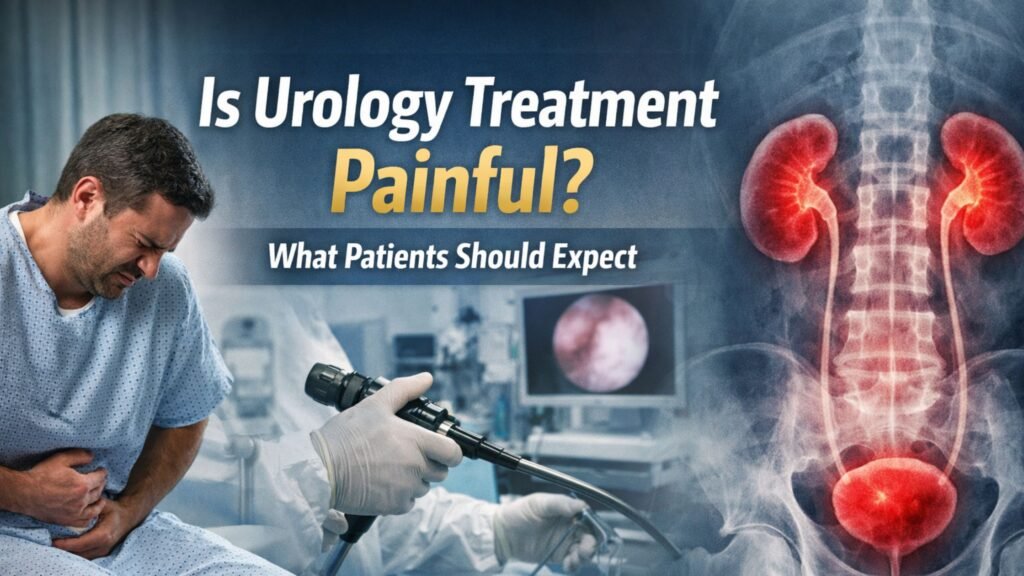
If you’ve been referred to a urologist, one of the first things you probably want to know is: will it hurt? That’s a fair question — and an important one. Many people delay getting help for urinary, kidney, or reproductive health issues simply because they’re afraid of what the treatment might involve.
The truth is, most urology treatments today are far less painful than people expect. Medical technology has improved a lot, and experienced urologists use techniques that minimize discomfort at every stage — from diagnosis to recovery. This guide walks you through what actually happens during common urological procedures, what level of discomfort to expect, and how to prepare yourself.
Whether you’re dealing with kidney stones, a prostate issue, a urinary tract problem, or something related to men’s reproductive health, this article covers it all. You can also learn more about what a urologist treats here to understand whether you’re seeing the right specialist.
What Is Urology and Why Might You Need Treatment?
Urology is a medical specialty that deals with the urinary tract in both men and women, and the reproductive system in men. Urologists diagnose and treat a wide range of conditions including kidney stones, urinary tract infections (UTIs), bladder problems, prostate disease, erectile dysfunction, infertility, and more.
If your GP has referred you to a urologist, it doesn’t automatically mean surgery is on the table. Many urological issues are managed with medication, lifestyle changes, or minimally invasive procedures. Understanding what kind of treatment is right for you starts with proper diagnosis — which is usually the first step.
For a fuller picture of the conditions urologists handle, this complete guide for patients is worth reading before your first appointment.
Are Urology Diagnostic Tests Painful?
Before any treatment begins, your urologist needs to understand what’s going on. Most people are surprised to find that the diagnostic phase is much more straightforward than they expected.
Urine Tests
Urine tests are completely painless. You provide a sample, and the lab analyzes it for infection, blood, protein, or other markers. It’s one of the most common first steps in diagnosing urinary conditions.
Blood Tests (Including PSA Testing)
A PSA (Prostate-Specific Antigen) test is a simple blood draw. You may feel a brief pinch when the needle goes in, but that’s it. PSA tests are commonly used to screen for prostate issues and monitor treatment progress. You can read more about urology tests including PSA and ultrasound here.
Ultrasound
Ultrasound imaging is entirely non-invasive and painless. A gel is applied to the skin and a probe is moved over the area being examined. It’s used to look at the kidneys, bladder, and prostate. There’s no radiation, no needles, and no discomfort involved.
Cystoscopy
This is one diagnostic test that patients sometimes find uncomfortable. A cystoscope — a thin, flexible tube with a camera — is inserted through the urethra to look inside the bladder. Local anesthetic gel is applied beforehand to minimize discomfort. Most patients describe it as a feeling of pressure rather than pain. The procedure typically takes under 10 minutes. Rigid cystoscopies done under general anesthesia are completely pain-free during the procedure itself.
Prostate Biopsy
A prostate biopsy is done when PSA levels are elevated or imaging looks suspicious. A small needle is used to take tissue samples from the prostate, usually guided by ultrasound. Local anesthesia is given before the procedure. Some men feel a brief stinging sensation with each sample taken, but the discomfort is generally well-managed. You may feel some mild soreness afterward for a day or two.
Urodynamic Testing
Urodynamic tests assess how well the bladder and urethra are storing and releasing urine. A small catheter is placed in the bladder, which can cause mild discomfort. Most patients tolerate it well. The test takes about 30–45 minutes.
How Painful Are Common Urology Treatments?
Now let’s get into the treatments themselves. Pain levels vary depending on the procedure, your overall health, and how well the procedure is managed. Here’s an honest breakdown.
Kidney Stone Treatment
Kidney stones are notorious for causing severe pain — but that pain comes from the stone itself, not the treatment.
Shock Wave Lithotripsy (ESWL) is a non-invasive procedure where sound waves are used to break up kidney stones. You lie on a table and the machine delivers waves to the area where the stone is located. Most patients feel some discomfort or mild pain during the session, which is usually managed with mild sedation or pain relief. Afterward, you may feel sore around the treated area for a few days.
Ureteroscopy involves passing a thin scope through the urethra and bladder into the ureter to remove or break up a stone. It’s done under general or spinal anesthesia, so you won’t feel anything during the procedure. Recovery typically involves some urinary discomfort for a few days, especially if a stent is placed.
Percutaneous Nephrolithotomy (PCNL) is used for large or complex kidney stones. A small incision is made in the back to access the kidney directly. This is the most invasive of the three options and is done under general anesthesia. Recovery takes about 1–2 weeks and involves some soreness at the incision site.
Prostate Treatments
Transurethral Resection of the Prostate (TURP) is a standard procedure for benign prostatic hyperplasia (BPH), which causes urinary problems due to an enlarged prostate. It’s performed under spinal or general anesthesia. You won’t feel anything during the surgery. After the procedure, you may experience some burning during urination and a mild urge to urinate frequently for a few weeks. A catheter is usually placed for 1–2 days post-surgery.
Laser Prostate Surgery (HoLEP or GreenLight) is a less invasive alternative to TURP with faster recovery and less bleeding. Done under anesthesia, recovery is generally smoother and the side effects are milder.
Prostate Cancer Treatment options include surgery (radical prostatectomy), radiation, or hormone therapy depending on the stage. Each has its own profile of side effects and recovery. Your urologist will guide you on what suits your situation best.
Bladder Treatments
Bladder instillations involve placing medication directly into the bladder via a catheter. The catheter insertion may cause brief discomfort, but the procedure itself is short and usually well-tolerated.
Transurethral resection of bladder tumors (TURBT) is performed under anesthesia to remove bladder tumors. Recovery involves some urinary discomfort and possibly a catheter for a short time.
Urinary Incontinence Treatments
Pelvic floor physiotherapy, medications, and bladder training are all non-invasive and pain-free options. If surgical intervention is needed — such as a sling procedure — it’s done under anesthesia. Recovery discomfort is typically manageable with standard pain relief.
Vasectomy
A vasectomy is a minor surgical procedure for male contraception done under local anesthesia. You’ll feel a small injection, and the procedure itself takes about 15–20 minutes. Afterward, most men experience mild scrotal soreness for a few days. It’s one of the most straightforward urological procedures in terms of recovery.
Circumcision (for Medical Reasons)
When performed for medical conditions such as phimosis (tight foreskin), circumcision is done under local or general anesthesia depending on the patient’s age. Recovery takes about 1–2 weeks with some swelling and tenderness that responds well to pain medication.
What About Men’s Health and Fertility Treatments?
Men dealing with erectile dysfunction, low testosterone, premature ejaculation, or fertility issues often see a urologist with andrology expertise. These consultations usually start with blood tests and a clinical examination — both non-invasive. Treatment options range from medication to minimally invasive procedures depending on the underlying cause.
Procedures like varicocele repair (done for fertility issues) or penile implant surgery are done under anesthesia. Recovery varies but your specialist will always walk you through what to expect.
Recovery: What to Expect After Urology Procedures
Recovery depends heavily on the type of procedure. Here’s a general breakdown:
Minor procedures (cystoscopy, vasectomy, bladder instillations): Most patients return to normal activities within 1–3 days. Mild soreness or urinary discomfort is common but manageable.
Intermediate procedures (ureteroscopy, TURP, TURBT): Expect 1–2 weeks of recovery. A catheter may be in place for a short period. Pain medication is typically prescribed.
Major procedures (PCNL, radical prostatectomy): Recovery ranges from 2–6 weeks. You’ll have support from your surgical team throughout.
Staying well-hydrated, resting when needed, and following your urologist’s aftercare instructions makes a significant difference in how quickly you recover.
How to Reduce Discomfort During Urology Treatment
There are several things you can do to make the experience easier:
Talk to your doctor beforehand. If you’re anxious, say so. Your urologist can explain exactly what will happen and adjust the plan if needed — for example, opting for general anesthesia instead of local for certain procedures.
Ask about sedation options. Many procedures that are done under local anesthesia can also be done with mild sedation if you’re particularly anxious.
Follow pre-procedure instructions. Staying hydrated, avoiding certain medications, or following fasting guidelines (if anesthesia is involved) helps everything go more smoothly.
Plan for rest afterward. Even if a procedure is minor, give yourself time to recover at home. Arrange for someone to drive you if sedation is involved.
Take prescribed medication. If your doctor prescribes pain relief post-procedure, use it as directed. Staying ahead of discomfort is easier than playing catch-up.
When Should You See a Urologist?
Don’t wait until symptoms become severe. Many urological conditions are much easier to treat when caught early. See a urologist if you notice:
- Blood in your urine
- Frequent or painful urination
- Difficulty starting or stopping urination
- Lower back or flank pain (possible kidney stones)
- Erectile dysfunction or changes in sexual function
- Testicular pain or lumps
- Urinary leakage or incontinence
It also helps to understand the difference between urologists and other specialists like nephrologists, especially if you’re dealing with kidney-related issues. This article explains the key differences so you can be sure you’re seeing the right doctor.
Fear vs. Reality: A Realistic Look at Urology Pain
It’s worth being straightforward about this: no medical procedure is completely sensation-free, and some urological treatments do involve temporary discomfort. But the fear of pain is almost always worse than the experience itself — especially when you’re in the hands of a skilled, experienced specialist who takes patient comfort seriously.
Modern urology uses local anesthesia, sedation, general anesthesia, and minimally invasive techniques to minimize pain wherever possible. The goal is not just to treat the condition but to make the experience as manageable as possible for the patient.
The most painful thing for most people isn’t the treatment — it’s waiting too long to get help and letting the condition worsen.
Meet Dr. Syed Imtiaz Ali — Expert Urologist in Dubai
If you’re looking for trusted, experienced urological care in Dubai, Dr. Syed Imtiaz Ali is a name worth knowing.
Dr. Imtiaz is a certified medical surgeon with a strong academic and clinical background:
- MBBS
- FCPS (Surgery)
- FCPS (Urology)
- FRCS (Ireland)
- FRCS (Edinburgh), UK
His areas of expertise cover a wide spectrum:
- Urology — kidney stones, prostate conditions, bladder disorders, urinary tract issues
- General Surgery — a broad surgical foundation that supports complex case management
- Men’s Health (Andrology) — erectile dysfunction, low testosterone, premature ejaculation
- Sexology and Fertility Issues — male reproductive health and fertility treatment
- Urinary, Reproductive, and Sexual Health Problems — comprehensive diagnosis and treatment
Dr. Imtiaz brings years of hands-on surgical experience across urology and general medicine. He is known for combining technical precision with a patient-centered approach — taking the time to explain conditions clearly and ensure patients feel comfortable and informed before any procedure begins.
Whether your concern is a routine urinary issue or a more complex urological condition, Dr. Imtiaz provides expert care in a professional, compassionate setting in Dubai.
Book a consultation with Dr. Syed Imtiaz Ali — Expert Urologist in Dubai
View all urology services offered by Dr. Imtiaz
Final Thoughts
Urology treatment doesn’t have to be something you dread. Most diagnostic tests are painless or minimally uncomfortable, and procedures are performed with anesthesia or sedation to keep you comfortable. Recovery from even the more involved procedures is manageable with proper support and aftercare.
The most important step you can take is to not put off seeking help. The sooner a urological issue is diagnosed, the more treatment options you have — and the less invasive those options tend to be.
If you’re in Dubai and looking for a urologist you can trust, reach out to Dr. Syed Imtiaz Ali. His qualifications, experience across multiple specialties, and patient-first approach make him a strong choice for anyone dealing with urinary, reproductive, or men’s health concerns.
For more helpful reading, explore these guides:
- What Does a Urologist Treat? A Complete Guide for Patients
- Urology Tests Explained: Ultrasound, PSA, Urine Tests
- Urologist vs Nephrologist: Which Specialist Do You Need?
- Expert Urologist in Dubai: Diagnosis, Treatment & Advanced Care

Dr. Syed Imtiaz Ali is a leading Consultant Urologist in Dubai with extensive experience in treating complex urological conditions. He is committed to providing compassionate, evidence-based care to help patients achieve better health and peace of mind.